
Hip Pain During Pregnancy — Causes and What Actually Helps
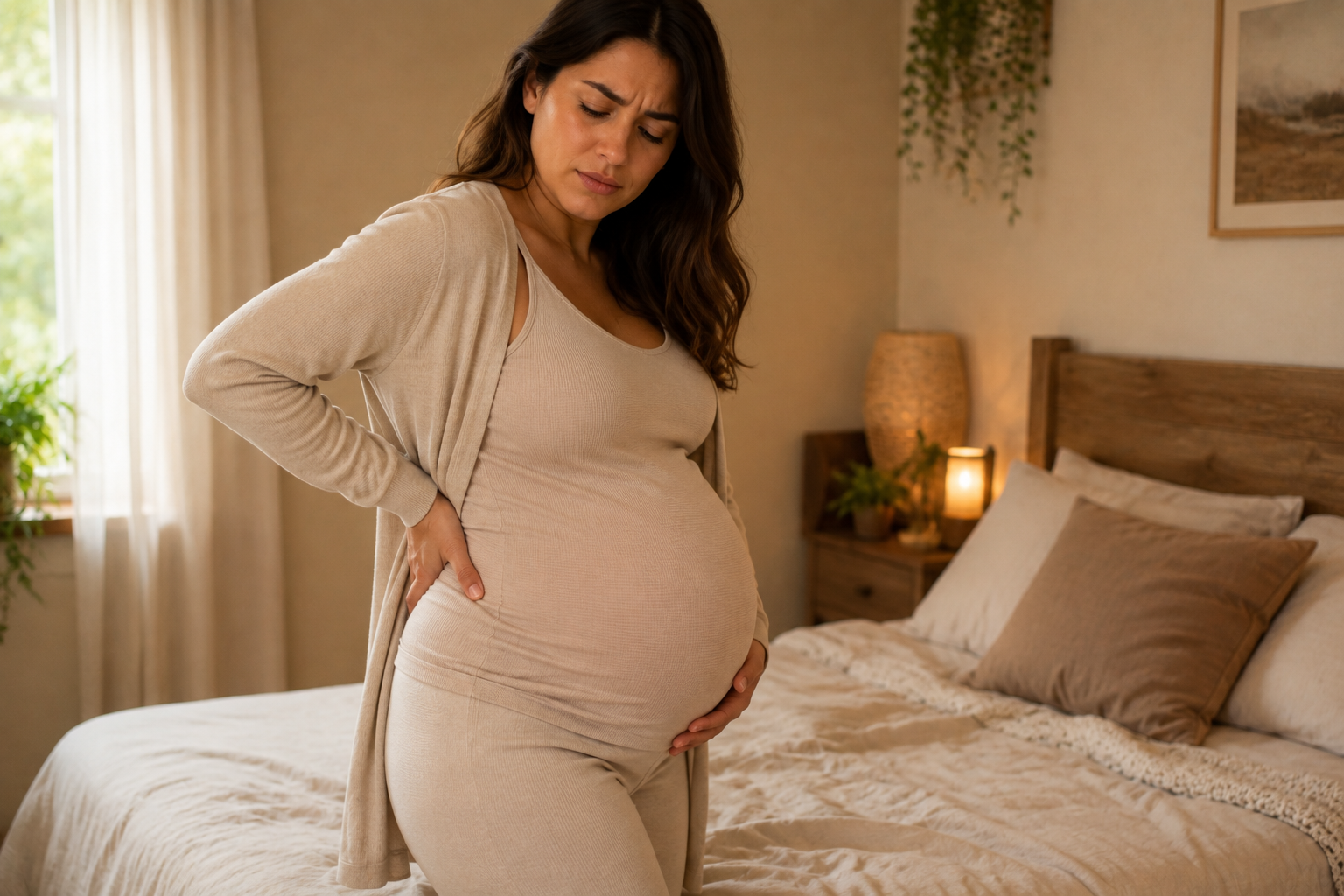
Hip pain is one of those pregnancy symptoms that doesn't get nearly as much attention as morning sickness or back pain, but for a lot of people, it's genuinely one of the most disruptive things about being pregnant. Struggling to roll over in bed, wincing when you walk up stairs, waking up at 3am because your hips are screaming — it's exhausting on top of already being exhausted.
The good news is that hip pain during pregnancy is very treatable. But first, it helps to understand what's actually causing it, because not all hip pain is the same.
The Main Types of Hip Pain in Pregnancy
SI Joint Pain (Sacroiliac Joint Dysfunction)
The sacroiliac joints are where your pelvis connects to your sacrum — the triangular bone at the base of your spine. During pregnancy, a hormone called relaxin floods your system to loosen ligaments in preparation for birth. This is useful when labor arrives, but in the meantime, it creates instability throughout the pelvis. The SI joints, which normally don't move much, can become hypermobile and inflamed.
SI joint pain typically shows up as a deep ache in the low back and buttock area, often one-sided, and tends to be aggravated by anything involving weight-shifting — stairs, walking, and especially getting in and out of the car.
Hip Flexor Tightening
As your belly grows, your center of gravity shifts forward. Your body compensates by changing your posture — often with an increased curve in the low back (anterior pelvic tilt) and a shortening of the hip flexors. Those muscles are already working overtime, and when they tighten, they can contribute to deep hip pain, front-of-the-thigh tightness, and low back aching.
Pubic Symphysis Dysfunction (SPD)
The pubic symphysis is the joint at the front of your pelvis where the two sides of your pubic bone meet. Relaxin affects this joint too, and when it becomes too mobile or inflamed, the result is sharp pain in the front of the pelvis, the inner thighs, and sometimes the hips. Many people with SPD describe pain that's worse when separating the legs — getting out of bed, stepping over something, or going up stairs one leg at a time.
What It Often Feels Like
Hip pain in pregnancy tends to have some common threads:
- Deep aching rather than sharp and stabbing
- Worse with weight-bearing activities
- Significantly worse when rolling over at night — this is one of the most reliable signals
- Worse with stairs, especially stepping up
- Sometimes clicking or grinding in the hip or pelvis
- May be worse later in the day after more activity
What Actually Helps
Chiropractic Care
This is a big one. Chiropractic care — specifically focused on the pelvis and SI joints — is one of the most effective interventions for pregnancy-related hip pain. At Polaris Collective Wellness, we work specifically on restoring balance and proper mechanics to the pelvis using gentle, pregnancy-adapted techniques.
The Webster Technique is a prenatal-specific chiropractic protocol that addresses the function of the sacrum, pelvis, and surrounding soft tissue. When your pelvis is asymmetrical — and pregnancy almost always creates some degree of asymmetry — the muscles and ligaments on one side are under more strain. Correcting that alignment can bring significant relief and often quickly.
Pelvic Floor Physical Therapy
The pelvic floor muscles are deeply connected to everything happening in your hips and pelvis during pregnancy. A pelvic floor PT can assess muscle tension, coordination, and how your body is compensating — and help address it from the inside out. Chiro and pelvic PT together are a genuinely powerful combination.
Prenatal Massage
Hip flexors, piriformis, and glute muscles get chronically tight in pregnancy, and massage that specifically targets these areas can provide real relief. Not just relaxation — actual therapeutic work on the tissues that are overloaded.
Clamshell Exercises
Strengthening the hip abductors (the muscles on the outside of the hip) helps stabilize the pelvis and takes load off the SI joints. Clamshells — lying on your side, knees bent, feet together, opening and closing the top knee like a clamshell — are one of the best pregnancy-safe exercises for this.
Supportive Footwear
Your feet change during pregnancy (thanks again, relaxin), and wearing supportive shoes rather than flat sandals or flip-flops can meaningfully reduce how much strain travels up the chain into your hips and pelvis. A good walking shoe with arch support is worth it.
Supportive Sleeping Position
A body pillow or pillow between the knees while side-lying keeps your hips stacked and reduces torque on the pelvis overnight. For many people, this one change makes a significant difference in nighttime pain.
A Note on What to Expect
Hip pain in pregnancy is common, but it's not something you just have to white-knuckle through. Many people see substantial improvement with consistent chiropractic care, especially when it's combined with the other supports above. Starting care earlier in pregnancy tends to produce better outcomes — if your hips are already starting to ache in the second trimester, that's a good time to come in.
---
If hip pain is affecting your sleep, your mobility, or just your day-to-day quality of life during pregnancy, we want to help. Dr. Raleigh Warren and the team at Polaris Collective Wellness in Portland, OR, specialize in prenatal care that's evidence-informed, gentle, and genuinely effective.
Call us at (503) 676-6728 or visit https://polariscw.com to schedule. We're at 5441 S Macadam Ave, Portland, OR 97239.