
Hyperbaric Oxygen Therapy (HBOT), Allergies & the Pacific Northwest: A Breath of Relief in a Familiar Story
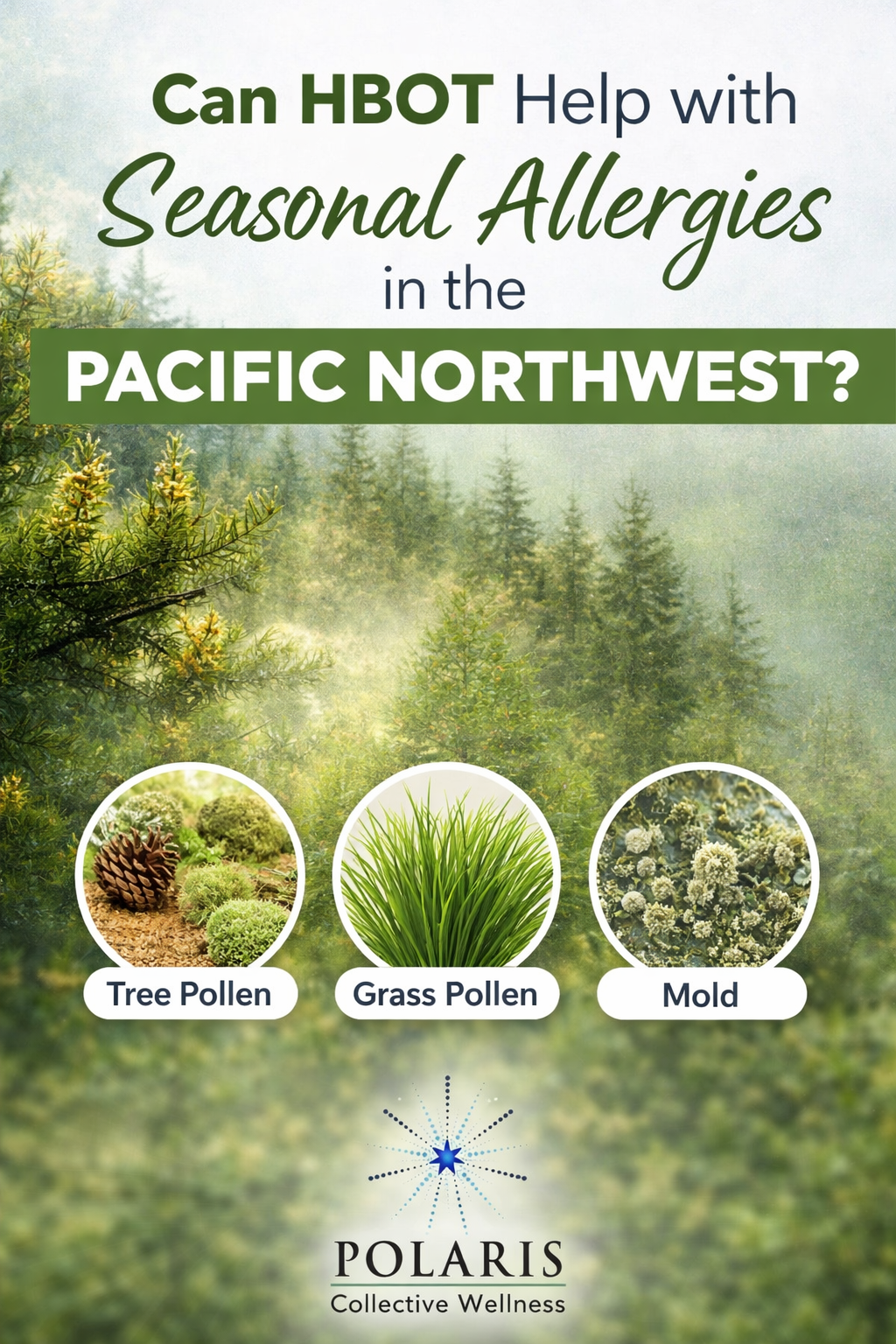
In the Pacific Northwest, allergies follow a storyline as familiar as an old tale—predictable, recurring, and difficult to escape. As winter fades, tree pollen quietly takes the stage. Soon after, grasses rise, and just when relief feels near, mold lingers in the ever-present dampness. For many, this cycle doesn’t feel seasonal—it feels constant.
With each chapter, the symptoms return: congestion, sinus pressure, fatigue, and that persistent mental fog. It’s a pattern shaped by the region itself—mild temperatures stretching pollen seasons, moisture feeding mold growth, and dense greenery releasing a steady stream of airborne irritants. The immune system, in turn, rarely gets a break, remaining in a near-continuous state of response.
Most people learn to manage the story as it unfolds. Antihistamines, nasal sprays, and other conventional treatments can help keep symptoms at bay. But for those looking to go beyond symptom management, there’s another layer to explore—one that focuses on how the body recovers and adapts.
Hyperbaric Oxygen Therapy (HBOT) introduces a different kind of support to this ongoing cycle. By breathing concentrated oxygen in a pressurized environment, the body is able to absorb significantly more oxygen than usual. This increase allows oxygen to reach deeper into tissues, supporting processes that are often strained during chronic inflammation.
At its core, HBOT works behind the scenes—helping the body repair, regulate, and restore. Increased oxygen availability can support tissue healing in irritated sinuses, improve circulation, and help modulate inflammatory responses. For individuals whose immune systems tend to overreact to environmental triggers, this added support may help create a more balanced response over time.
Within the context of allergies, this can shift the experience. Inflammation may ease, sinus tissues may recover more efficiently, and the lingering fatigue and brain fog many people experience can begin to lift. While HBOT isn’t a cure for allergies, it can play a meaningful supporting role in how the body handles them.
In a place like the Pacific Northwest—where the “allergy story” rarely has a clear ending—taking a broader approach to care can make a noticeable difference. Rather than focusing solely on suppressing symptoms as they arise, therapies like HBOT aim to strengthen the body’s ability to respond, recover, and maintain balance.
And so, the story continues. The seasons will shift, the pollen will return, and the rain will fall. But with the right support, the experience of that story can change—becoming less about enduring symptoms, and more about building resilience through each familiar chapter.